THE GLOBAL TALC INDUSTRY
The world of talc, in one place.
From geology and history to market data, applications and the companies shaping the industry — an independent, freely accessible guide for buyers, researchers and producers worldwide.
This site is available in 16 languages.
- 6.5 Mtannual global output
- US$3.4 Bmarket value
- 30%China share of output
- 250known talc deposits worldwide
01Company map
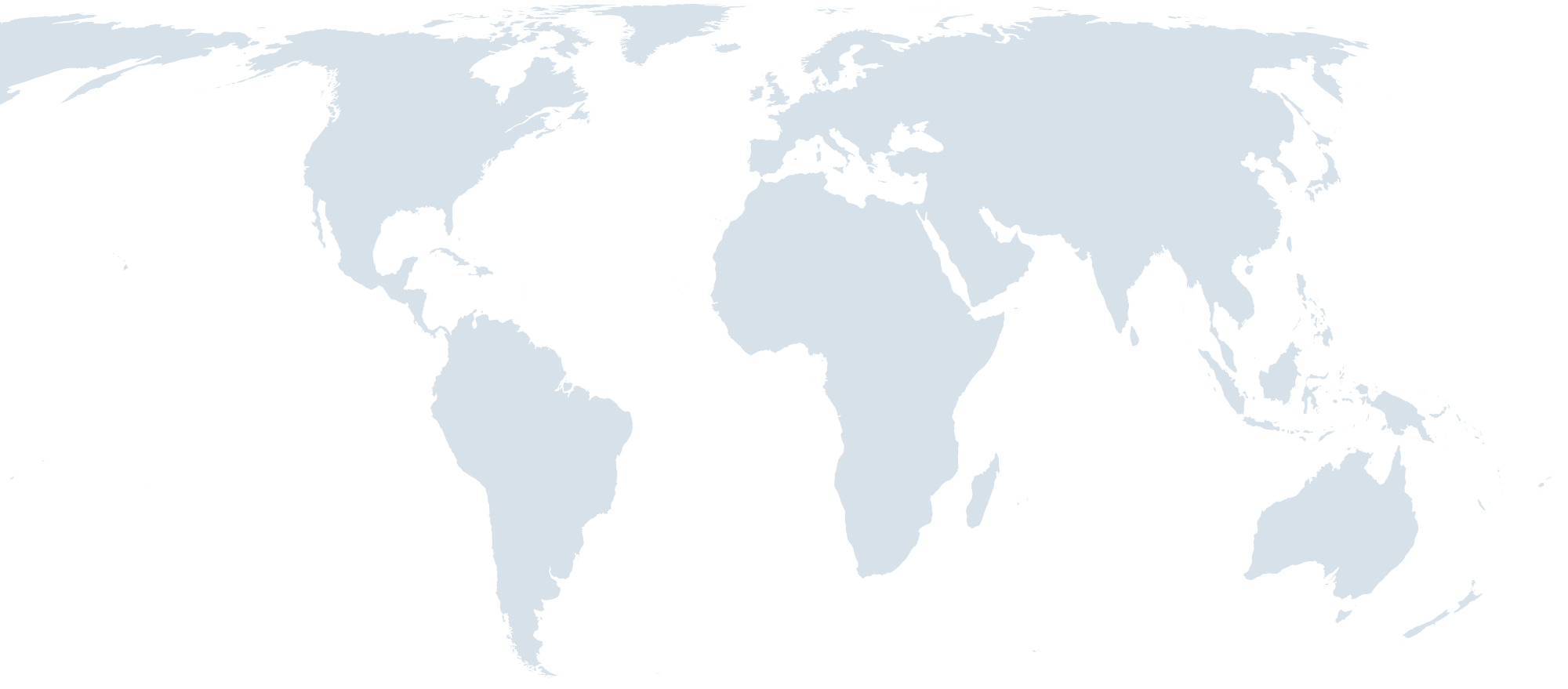
Global talc company navigator
Click a marker or a company name to open its profile and reach the company’s official website.
Company directory
23 companies-
Imerys is a well-known talc company headquartered in France. The world’s largest specialty minerals group, operating talc mines and processing plants across Europe, Asia and the Americas, with a new talc plant in Wuhu, China serving the automotive and EV market.
-
Mondo Minerals is a well-known talc company headquartered in Netherlands. A European talc specialist with mining operations in Finland and processing in the Netherlands, known for high-brightness, high-purity talc for plastics, coatings, cosmetics and food-contact applications.
-
IMI Fabi is a well-known talc company headquartered in Italy. An Italian multinational with talc mines and plants across Europe, Australia, the Americas and Asia. In 2025 it acquired Elementis’s industrial talc business, strengthening its global footprint.
-
Minerals Technologies is a well-known talc company headquartered in United States. A US-listed specialty minerals company (NYSE: MTI) supplying talc and engineered mineral solutions to the paper, packaging, automotive and consumer markets worldwide.
-
Golcha Group is a well-known talc company headquartered in India. One of India’s oldest talc and soapstone groups, operating multiple mines and producing talc powders for plastics, rubber, paints, paper, ceramics and cosmetics.
-
Nippon Talc is a well-known talc company headquartered in Japan. Japan’s leading talc producer, manufacturing talc, magnesium hydroxide and inorganic fillers for automotive plastics, coatings, paper and cosmetics, with a long record of quality control.
-
Sibelco is a well-known talc company headquartered in Belgium. A global minerals group headquartered in Belgium, supplying high-quality talc and a broad minerals portfolio to ceramics, coatings, plastics, construction and foundry industries.
-
Liaoning Aihai Talc is a well-known talc company headquartered in China. A major Chinese talc producer based in Haicheng, Liaoning — one of the world’s finest talc deposits — supplying white and black talc grades to plastics, ceramics, coatings, paper and cosmetics.
-
HETALC Powder Technology is a well-known talc company headquartered in China. Founded in 1999 in Haicheng, Liaoning, Hetalc Powder Technology integrates R&D, production, sales and import–export trade in non-metallic mineral powders — talc, ground calcium carbonate, dolomite, chlorite powder and magnesia — and publishes technical data sheets for every grade.
-
Elementis is a well-known talc company headquartered in United Kingdom. A UK-based specialty chemicals company long known for premium talc products for personal care, cosmetics and pharmaceutical applications before its talc business was divested in 2025.
-
Barretts Minerals is a well-known talc company headquartered in United States. A US talc producer operating mines and processing facilities in Montana and Alabama, supplying industrial and cosmetic-grade talc in North America and internationally.
-
RHI Magnesita (Brazil) is a well-known talc company headquartered in Brazil. A Brazil-based minerals group with a long history in talc and magnesia, supplying the ceramics, refractories, steel and agricultural sectors across South America and beyond.
-
20 Microns is a well-known talc company headquartered in India. An Indian public company producing micronised industrial minerals including talc, serving plastics, coatings, rubber, ceramics, paper and cosmetics markets in India and abroad.
-
Vasundhara Micron is a well-known talc company headquartered in India. An Indian mineral producer specialising in micronised talc and industrial minerals for plastics, paints, rubber and paper, with a focus on consistent particle-size control.
-
Liaoning Beihai Industry Group is a well-known talc company headquartered in China. Founded in 1987 in Haicheng as a stone powder factory and now a mining group integrating talc, calcite and magnesite, producing more than 500,000 tonnes of talc powder a year and selling to over 30 countries.
-
Liaoning Xinda Talc is a well-known talc company headquartered in China. Founded in 1995 and ranked among China’s top five talc producers, with three mines, three production bases and eight subsidiaries; proven reserves of about 12 million tonnes across talc powder, talc masterbatch and hollow-board product lines.
-
Pingdu Talc Mining is a well-known talc company headquartered in China. Established in 1958 in Shandong, integrating mining, processing and international trade; its “White Dove” brand talc is exported worldwide — around 80% of output — in grades from 40 to 5,000 mesh.
-
Longsheng Huamei Talc is a well-known talc company headquartered in China. Founded in 1985 in Longsheng, Guangxi, as a joint venture with an American minerals group; produces about 100,000 tonnes of talc lumps and 130,000 tonnes of talc powder a year, including pharmaceutical, food and industrial grades.
-
Guangxi Longguang Talc is a well-known talc company headquartered in China. Founded in 1974 in Longsheng, Guangxi, and state-controlled, with two large talc mines; its “Osmanthus” brand talc powder reaches 150,000–200,000 tonnes a year, sold across Asia, Europe, Africa and the Americas.
-
Guilin Guiguang Talc is a well-known talc company headquartered in China. Part of Guangxi Guilin Talc Development, with a very large high-quality open-pit mine holding more than 8 million tonnes of reserves; produces about 200,000 tonnes of talc lumps and 100,000 tonnes of powder a year, including pharmaceutical and food grades.
-
Jiangxi Guangyuan Chemical is a well-known talc company headquartered in China. More than two decades of experience in inorganic non-metallic mineral powders, with six production bases and over 100 production lines; products include nano calcium carbonate, ground calcium carbonate, talc powder and magnesium hydroxide.
-
Liaoning Jinghua New Materials is a well-known talc company headquartered in China. A specialised and innovative talc powder producer based in Haicheng, serving modified plastics, honeycomb ceramics, rubber, coatings and paper, with custom grinding from 325 to 5,000 mesh.
-
Liaoning Dongyu Minerals Group is a well-known talc company headquartered in China. A Haicheng-based group of twelve companies producing modified and unmodified talc powder and calcium carbonate from 325 to 30,000 mesh, with an annual capacity of about 500,000 tonnes of powders and one million tonnes of ore.
02Mineral profile
Getting to know talc
Talc is a layered hydrated magnesium silicate, Mg₃Si₄O₁₀(OH)₂. With a Mohs hardness of 1 it is the softest mineral on earth, chemically inert, white, platy and strongly oleophilic — a rare combination that explains its use in plastics, ceramics, coatings, paper, cosmetics and pharmaceuticals.
Hydrous magnesium silicate
A layered silicate in which silicon may be partly replaced by aluminium or titanium, and magnesium by iron, manganese or nickel — the origin of talc’s many varieties.
Mohs hardness
The softest known mineral, scratchable by a fingernail. Density 2.58–2.8 g/cm³ and refractoriness around 1,490–1,510 °C.
Lamellar structure
A unique layered lattice gives talc its lubricity, reinforcement and low abrasion — the key to its role as a functional filler in plastics.
Versatile uses
Plastics, paper, coatings, ceramics, rubber, cosmetics, pharmaceuticals, food and honeycomb ceramics all rely on talc.
03Industry status
A mature market with a high-grade divide.
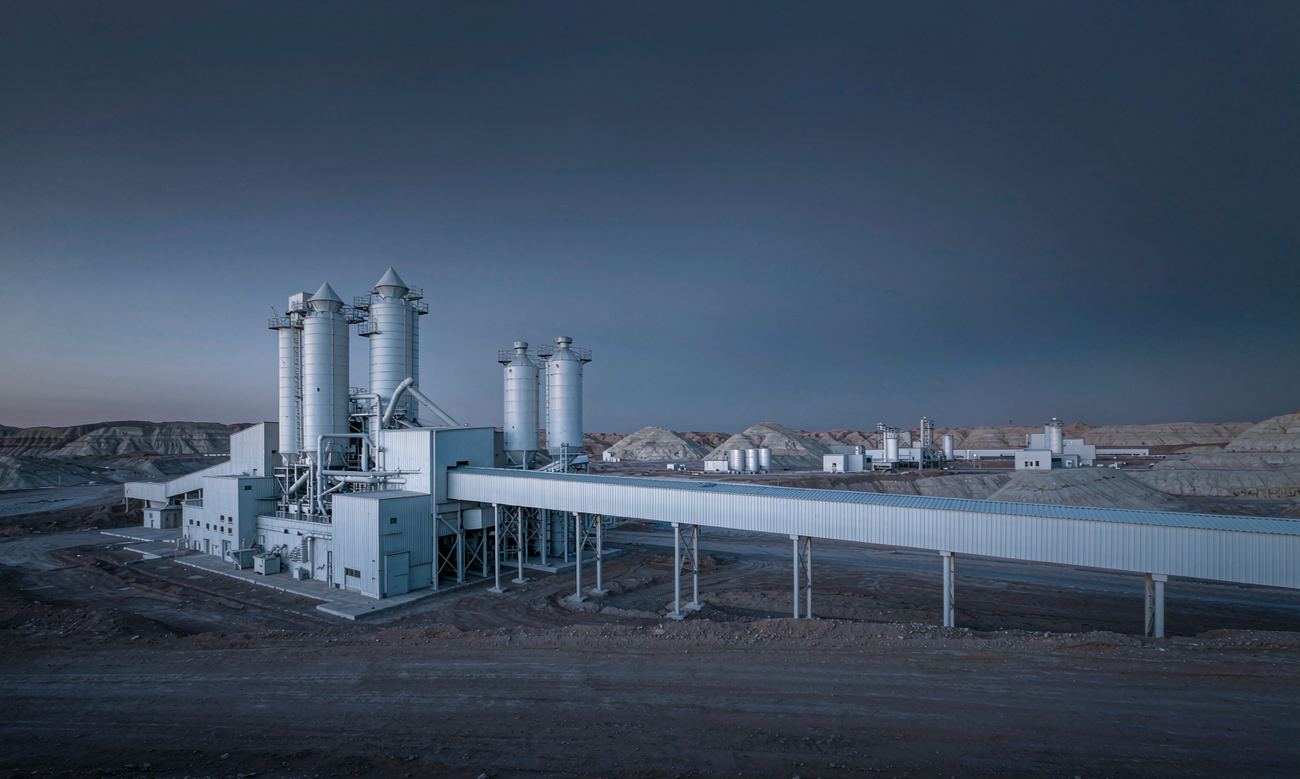
The talc industry is globally distributed but concentrated at the top: six producer groups control roughly 35% of world capacity, while high-purity, certified grades remain scarce.
Global output by region
Global demand by application
- Plastics & rubber29%
- Ceramics22%
- Paints & coatings17%
- Cosmetics & personal care9%
- Paper8%
- Other15%
Share of world total, %
04History
Soft stone, long history.
- c. 5000 BC
Prehistoric carving
Neolithic artisans in Liaoning, China carve a human half-figure from talc, while Indus Valley craftsmen engrave steatite seals.
- 1590s
Powder for the face
Talc-based face powders become fashionable in European courts, beginning a cosmetic tradition that continues today.
- Late 1800s
Industrial mining
Large-scale mining begins in Italy, France and the United States to supply the paper, ceramics and rubber industries.
- 1894
Baby powder launched
Johnson & Johnson introduces talc baby powder, taking the mineral into hundreds of millions of households.
- 1930s–1960s
The plastics era
Talc is adopted as a filler and nucleating agent in polypropylene, opening its largest modern market.
- 2000s–today
Green, fine, traceable
Mine consolidation, jet milling, surface treatment and asbestos-free certification reshape the industry around purity and trust.
05Applications
One mineral, a hundred uses.
Talc’s softness, whiteness, plate-like structure, chemical inertness and affinity for organic compounds make it one of the most versatile industrial minerals.
Plastics & rubber
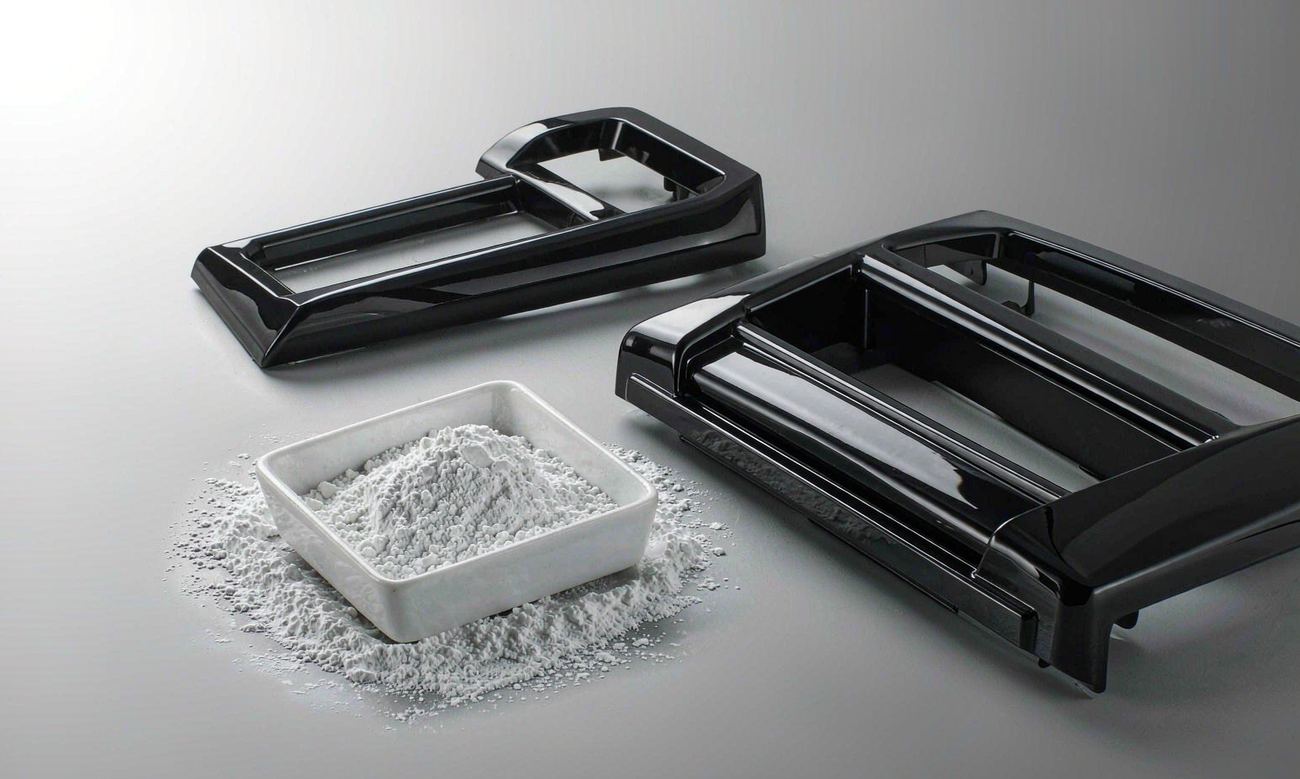
A reinforcing filler and nucleating agent in polypropylene — higher stiffness, better heat resistance and lower cost in automotive parts, appliances and films.
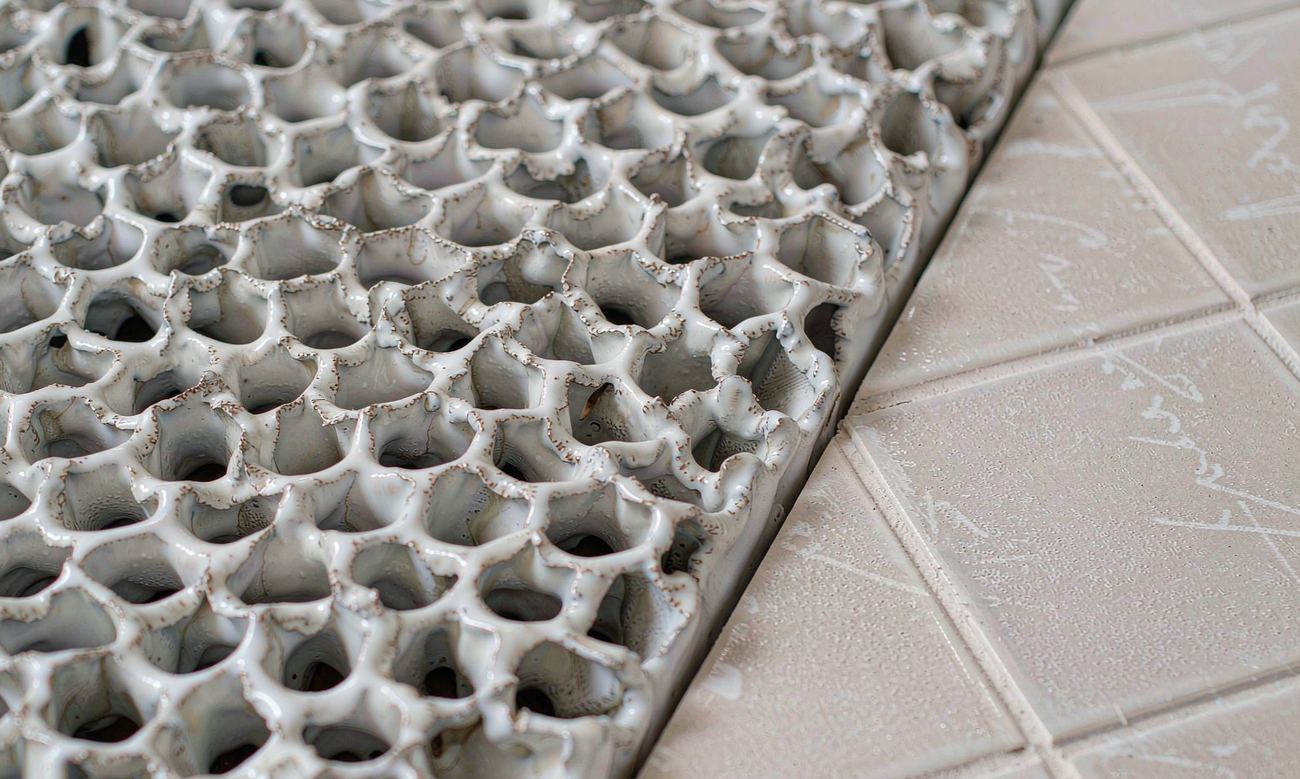
Ceramics & refractories
Talc supplies magnesia to ceramic bodies, lowering firing temperature and improving thermal shock resistance in tiles, sanitaryware and kiln furniture.
Paints & coatings
Plate-like talc particles improve barrier properties, scrub resistance, suspension and matte finish in architectural and industrial paints.
Paper
A soft, chemically inert filler that improves smoothness, printability and opacity while reducing the consumption of wood fibre.
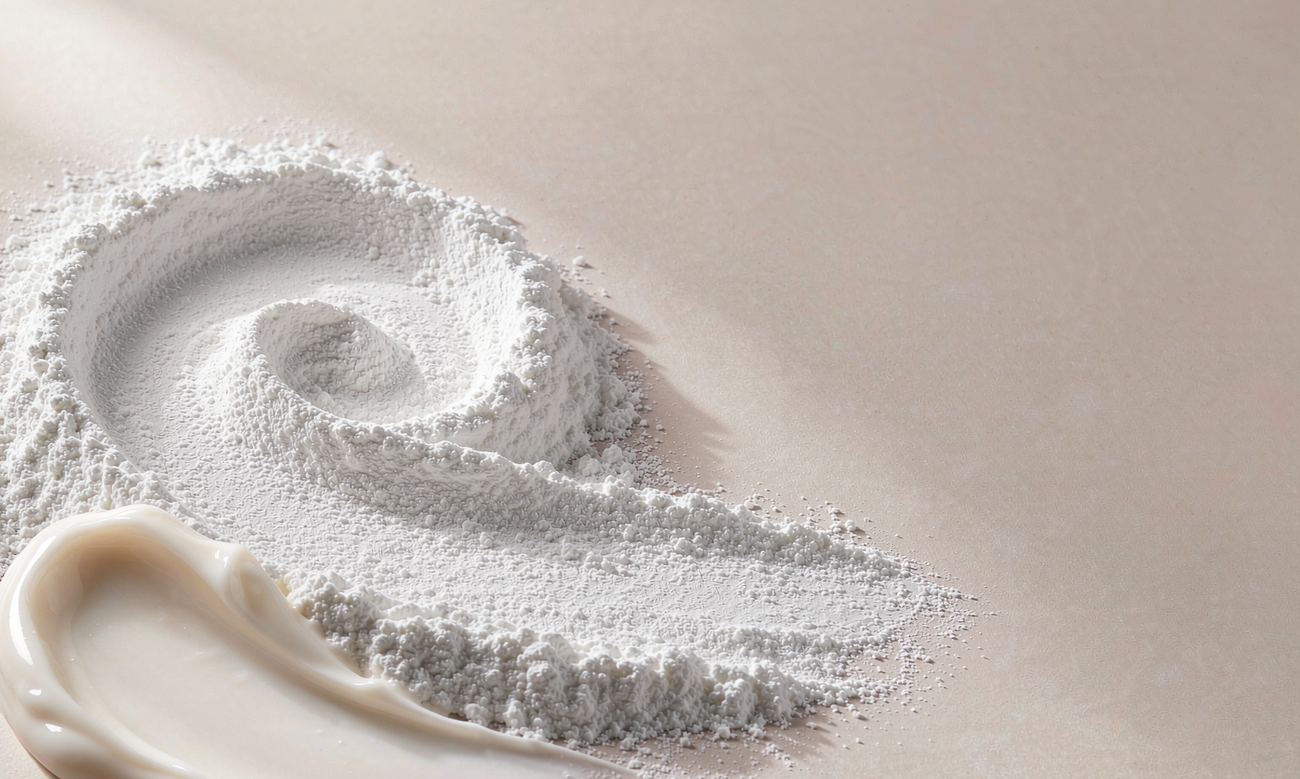
Cosmetics & personal care
Valued for softness, whiteness and oil absorption in body powders, foundations, soaps and deodorants — subject to strict purity standards.
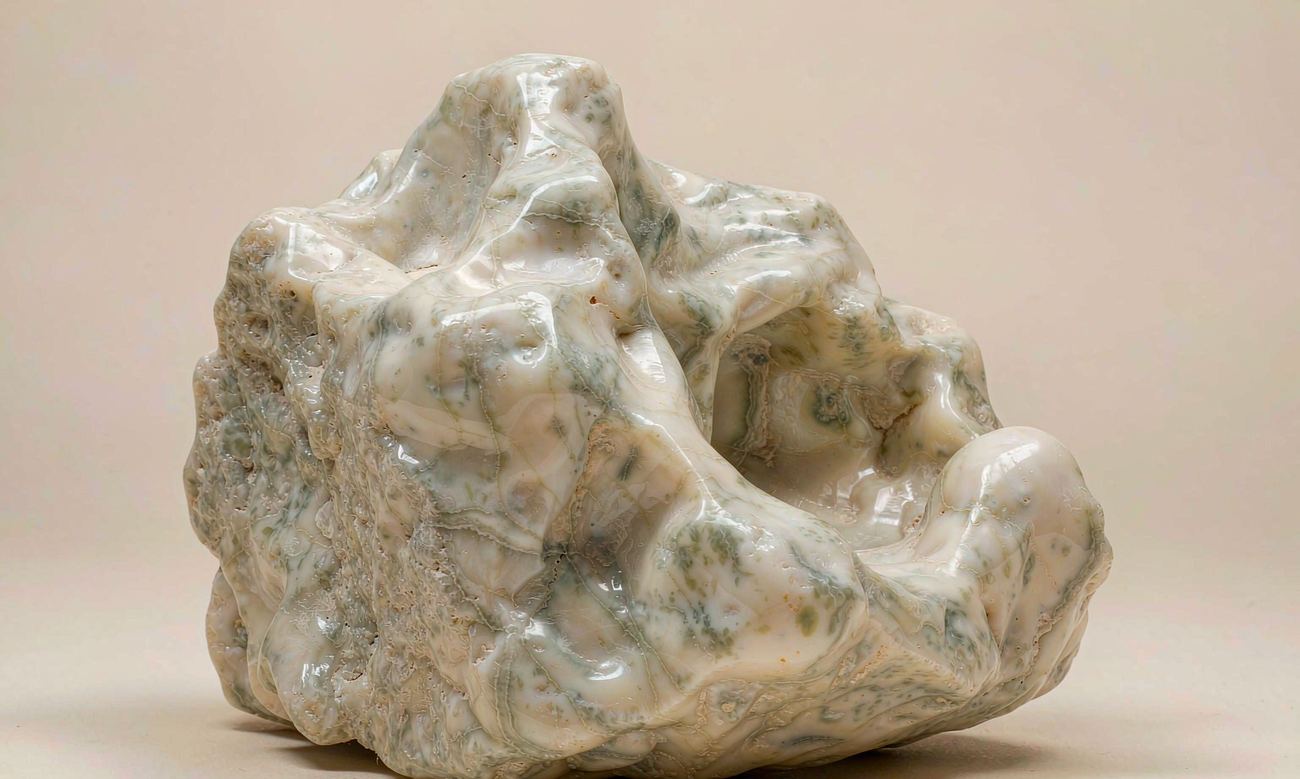
Pharma & food
A glidant and carrier in tablets, and an anti-caking and release agent in food processing and packaging, regulated to pharmaceutical and food grades.
06Outlook
The future of talc
Volume growth is modest; value growth comes from doing more with the mineral — finer, coated, certified and verifiably sourced.
Ultra-fine and functional grades
Ultra-fine talc represents about 20% of the market but a disproportionate share of value. Jet-milled 10-micron PP grades improve stiffness, impact balance and nucleation in automotive plastics. Hydrophobic stearate-coated grades deliver higher loading and better dispersion in compounds and coatings.
Automotive and EV lightweighting
Producers are investing close to growth markets: Imerys opened a talc processing plant in Wuhu, China in 2023 to serve the automotive sector, particularly electric vehicles. Talc-filled polypropylene enables lighter interior and exterior parts without sacrificing dimensional stability.
Consolidation and supply strategy
In May 2025 IMI Fabi acquired Elementis’s industrial talc business (enterprise value US$121 million), integrating the assets under brands including Mondo Minerals. The top five players now hold roughly 68% of the ultra-fine market, raising the importance of qualified multi-source supply.
Safety, certification and circularity
Asbestos-free verification, low heavy-metal limits and REACH compliance are now baseline requirements. Carbon reporting and hydropower-based production (e.g. Finland) are becoming differentiators as automakers and cosmetics brands tighten scope-3 targets. Circular-economy ventures are exploring recovery of mineral value from industrial by-products.
07FAQ
Frequently asked questions
GlobalTalc is an independent, advertising-light reference project that makes the global talc industry understandable and searchable — in 16 languages.
What is talc used for?
Most talc is used as a functional filler in plastics, ceramics, paints, paper and rubber; smaller but high-value volumes go into cosmetics, pharmaceuticals and food.
Which countries produce the most talc?
China is the largest producer, followed by India, the United States, Brazil, Pakistan and Finland. Together the top producers account for the majority of world output.
Is talc safe?
High-purity, asbestos-free talc is widely used in cosmetics, food and pharmaceuticals under strict regulatory standards. Industrial grades are governed by chemical composition and particle size specifications.
How do I choose a talc supplier?
Define the application, required whiteness, fineness (mesh or micron rating) and chemical limits, then compare technical data sheets. The company profiles on this site link to each supplier’s official website.
The companies behind the mineral.
A curated directory of well-known talc producers and suppliers across Europe, Asia, the Americas and India. Every profile links to the company’s official website.